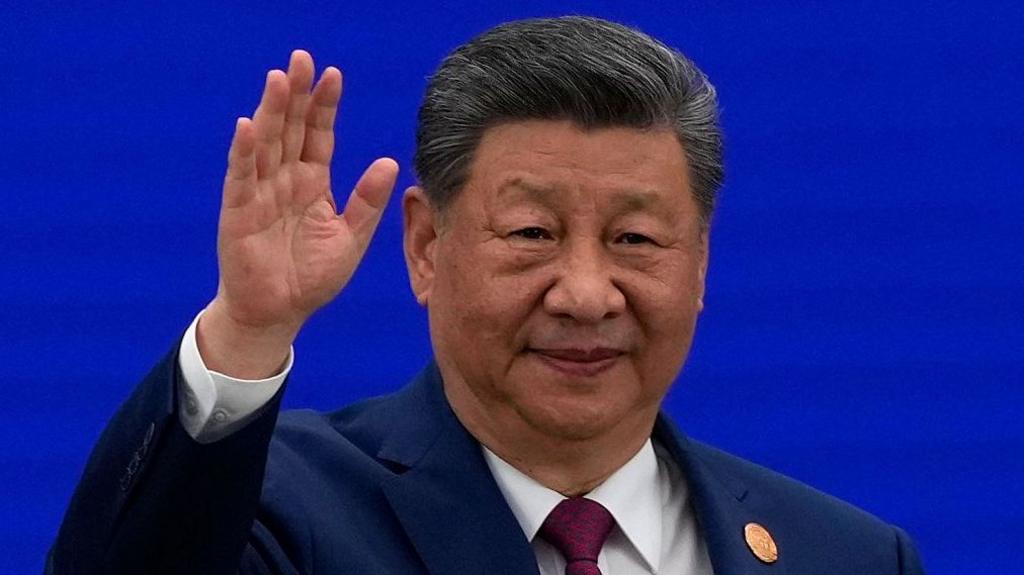
The Chinese Ministry of Foreign Affairs issued a formal rebuttal this week regarding Western assertions that Beijing is engaging in malicious competition within the global artificial intelligence sector. Addressing reports from international wire correspondents, Chinese Foreign Ministry officials characterized the narrative of a zero-sum technological race as a misrepresentation of China’s development goals, emphasizing that the nation’s advancements in generative AI and machine learning are intended for domestic economic modernization rather than geopolitical hegemony.
The friction centers on recent legislative and regulatory actions in Washington, specifically the expansion of export controls on high-end NVIDIA H100 and A100 graphics processing units. Beijing argues these restrictions—designed to limit the training capacity of Chinese large language models—constitute an abuse of state power that disrupts global supply chains. According to data from the China Academy of Information and Communications Technology, China currently hosts over 130 large language models, a figure that underscores the state’s push for self-reliance in the face of restricted access to advanced semiconductor lithography equipment.
In a statement released via the Ministry, officials asserted that artificial intelligence development should represent an inclusive endeavor for domestic economic modernization rather than a tool for containment or exclusionary regional blocs This stance contrasts sharply with the position held by the U.S. Department of Commerce, which maintains that China’s integration of AI into military and surveillance infrastructure poses a direct threat to national security. The Chinese government has countered by proposing a Global AI Governance Initiative, which advocates for a multi-polar approach to regulation that prioritizes the interests of the Global South over the current dominance of Silicon Valley firms.
The broader macroeconomic implications of this standoff are significant, as both nations accelerate investment in domestic AI infrastructure to secure a competitive edge in the next decade of digital industrialization. While the U.S. focuses on maintaining a lead in foundational model research and chip design, China is aggressively pursuing the integration of AI into its manufacturing and green energy sectors. This divergence in strategic focus suggests that the technological rivalry is less about a single technological breakthrough and more about which nation can more effectively scale AI applications across its entire economic base.
Looking ahead, the international community remains divided on how to establish a unified framework for AI safety and ethics. Beijing has signaled its intent to participate in upcoming multilateral summits, including the next iteration of the AI Safety Summit, provided that the dialogue remains inclusive. However, analysts expect that until the U.S. and China reach a baseline understanding regarding the strategic boundaries of AI deployment in military systems, the rhetoric of malicious competition will likely intensify as both powers vie for influence over the technical standards that will govern the future of the global digital economy.